If you are preparing for a type rating or your recurrent training, you have probably come across the term Level C flight simulator. It is no minor detail: a simulator's certification level indicates how faithfully it reproduces the aircraft and, therefore, what kind of training can be conducted in it.
In this article, we explain what a Full Flight Simulator is, what Level C means, and why it is worth considering when choosing where to train.
What Is a Full Flight Simulator
A Full Flight Simulator (FFS) is the most complex training device in aviation. It combines a cockpit that replicates that of a specific aircraft model, a visual system that represents the outside world, and a motion platform that conveys the sensations of flight to the pilot.
Unlike other training devices, such as procedures trainers or systems trainers, the FFS aims to make the experience as close as possible to operating the actual aircraft. That is why it is used for type ratings, proficiency checks, and emergency practice that would be neither safe nor practical to perform in flight.
What It Means for a Flight Simulator to Be Level C
Full Flight Simulators are classified into levels according to their degree of fidelity. This classification considers aspects such as aerodynamic behavior, flight control response, the visual system, sound, and motion.
A Level C simulator ranks among the highest levels on that scale. It requires a full motion platform and visual and systems representation realistic enough for the training to be representative of the aircraft.
A key point is that the level is not declared by the manufacturer or the training center: it is granted by the aviation authority after evaluating the device. In Venezuela, that authority is INAC, under the Venezuelan Aeronautical Regulations (RAV).
Why It Matters for Your Type Rating
The simulator's level determines how much of your training can be credited in it. The higher the certified fidelity, the more maneuvers, procedures, and checks can be performed in the device without needing the aircraft.
For pilots, this translates into concrete benefits:
Safe emergency practice: engine failures, fires, system failures, or adverse weather conditions can be repeated as many times as needed, without risk.
Real sensations: the motion platform helps pilots recognize changes in attitude, accelerations, and aircraft responses.
Team training: it allows crews to work on CRM and crew coordination in realistic scenarios.
Scenario control: the instructor can pause, repeat, or modify conditions to reinforce learning.
In short, training in a certified simulator does more than meet a requirement: it also provides an environment where mistakes become lessons rather than incidents.
The MACSIM 001: The CEA's Level C Simulator
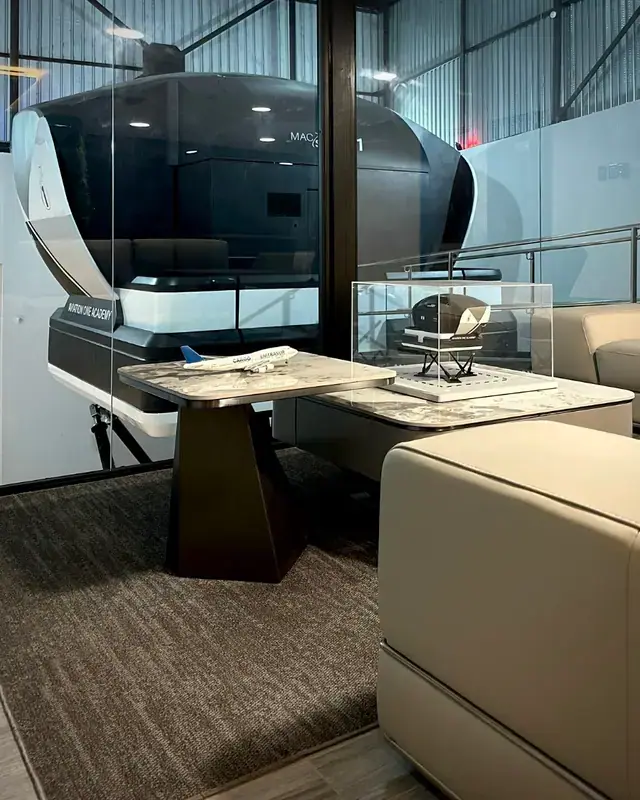
At 360ATC's Aeronautical Training Center (CEA) in Caracas, we operate the MACSIM 001, a Level C Full Flight Simulator certified by INAC. It features a real Beechcraft King Air B200 cockpit mounted on a six-degrees-of-freedom (6 DOF) motion platform.
Six degrees of freedom make it possible to reproduce translations and rotations along all axes, adding realism to takeoffs, approaches, turbulence, and emergency maneuvers. From the Instructor Operating Station (IOS), the instructor sets up each scenario, introduces failures, and monitors crew performance.
The MACSIM 001 is used for type ratings, recurrent training, CRM, and emergency training for private and commercial pilots. All of this is conducted under an ISO 9001:2015 quality management system and in compliance with the RAV.
What to Consider Before Training
Before enrolling in a type rating or recurrent training program, it is worth reviewing a few points. Confirm that the simulator matches the aircraft type you will fly and that its certification is current with the authority.
It is also advisable to check the program's prerequisites, such as licenses, medical certificate, and minimum experience. Arriving with a solid knowledge of the aircraft's procedures and systems lets you get the most out of every session.
If you would like to learn about the programs available on the MACSIM 001, check requirements, or schedule your next training session, contact us through the CEA's channels. Our team will guide you based on your license and your flight goals.